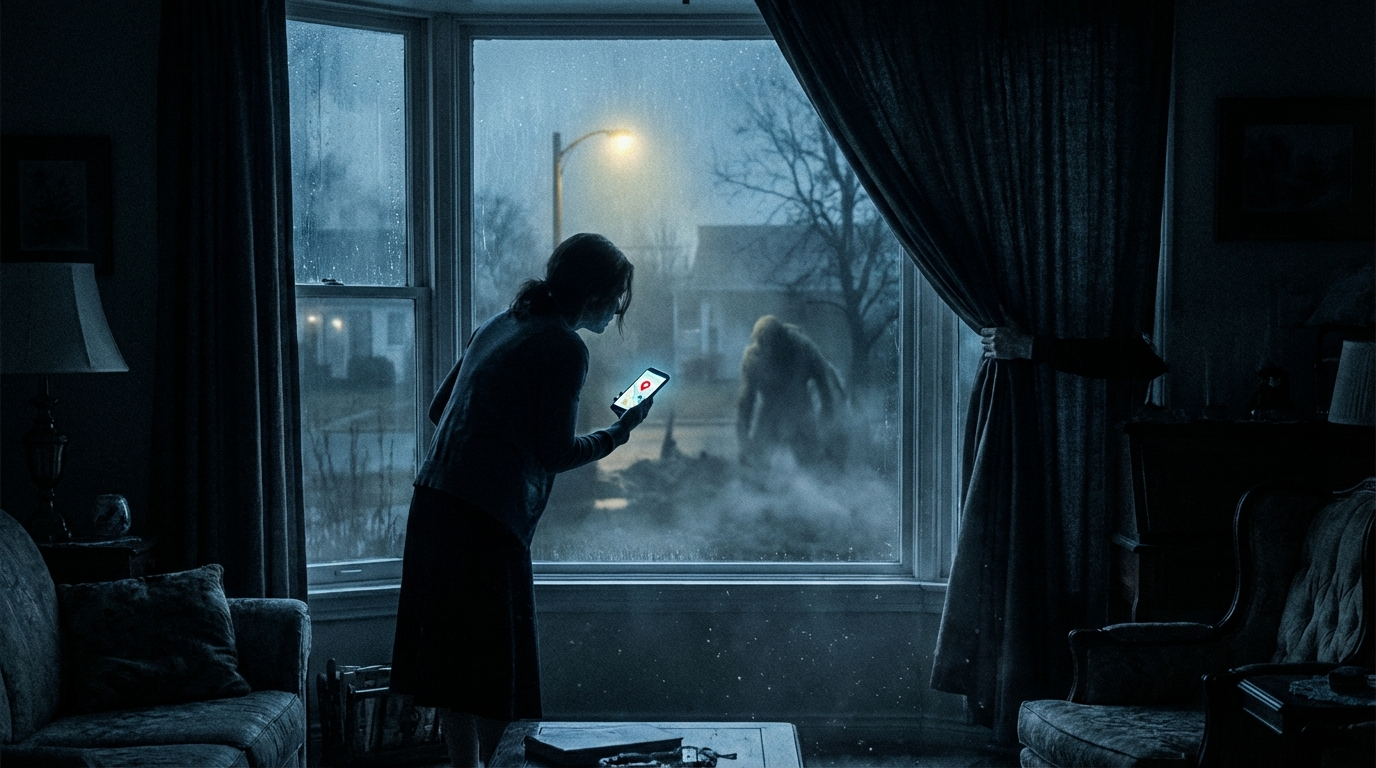
Digital Tether – Horror Story is the focus of this in-depth HorrorStuck guide. We examine the known facts, evidence, leading explanations, and the details that still remain uncertain.
Digital Tether – Horror Story: Key Facts and Context
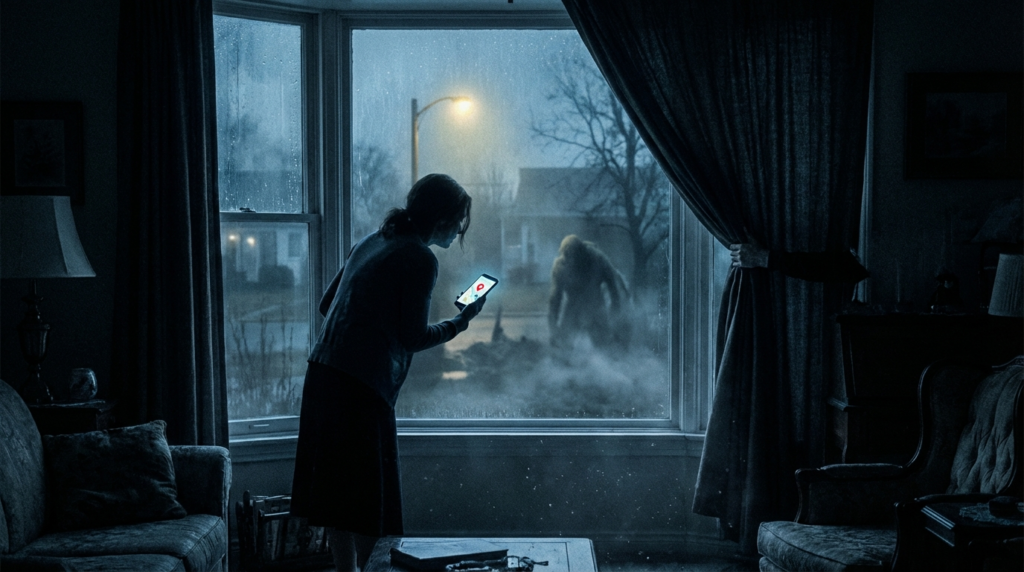
The house on Elm Creek Road was entirely too large for one person, a fact Clara was reminded of every time she turned off the downstairs lights. The silence didn’t just fill the rooms; it settled over them like a heavy, suffocating quilt. It had been exactly three years, two months, and fourteen days since her husband, Mark, had been lowered into the damp earth of St. Jude’s Cemetery, but the house still seemed to hold its breath, waiting for the heavy thud of his boots in the foyer.
Grief, Clara had learned, was not a straight line. It was a spiral staircase in the dark. Some days she was at the top, seeing the sunlight. Other days, like today, she was at the very bottom, feeling the cold stone against her back.
It was 2:45 AM. Clara lay in the center of the king-sized bed, staring at the swirling patterns of the ceiling plaster illuminated by the amber glow of the streetlamp outside. She suffered from the kind of insomnia that felt less like wakefulness and more like a low-grade fever. Her eyes burned, her joints ached, but her mind was a spinning top of mundane anxieties and phantom memories.
She turned over, her hand brushing the empty expanse of sheets beside her. The scent of him—cedarwood and cheap peppermint soap—had vanished from the fabric over a year ago, replaced by the sterile smell of lavender detergent.
On the nightstand, her smartphone sat face down. In the modern age, a phone was a phantom limb. It was the last thing she looked at before the darkness took her, and the first thing she reached for when the silence became too loud.
At exactly 3:00 AM, the silence was shattered.
It wasn’t a ringtone. It was a specific, sharp ping. The notification sound she had assigned to Mark years ago, back when he used to work late at the architectural firm. It was a cheerful, two-note chime that used to mean, I’m on my way home, warm up the dinner.
Clara’s heart seized. The blood in her veins felt as though it had turned instantly to slush. For a fraction of a second, her sleep-deprived brain bypassed logic and flooded her with a sickening wave of hope. Mark is texting me. Then, reality crashed down, cold and unyielding. Mark was dead. A drunk driver on Interstate 95 had seen to that.
The phone vibrated again against the wood of the nightstand. Bzz-bzz.
Clara sat up slowly. The air in the bedroom felt ten degrees colder. She reached out with a trembling hand, her fingers brushing the smooth glass of the phone’s case. She flipped it over. The stark, blinding white light of the lock screen illuminated her pale, terrified face.
There, suspended in the center of the screen, was a notification from her map application.
Mark is sharing his location with you.
Clara stopped breathing. She stared at the bold, black letters until they began to blur and swim in her vision. The metallic taste of adrenaline coated the back of her tongue. It was a mistake. A glitch. The servers were doing some kind of nocturnal maintenance, digging up old data packets and spitting them out. That was how technology worked, wasn’t it? It was flawed. It was stupid.
Her thumb hovered over the screen. She should swipe it away. She should turn the phone off, throw it in the drawer, and take a sleeping pill.
Instead, she tapped the notification.
The map application bloomed across the screen, a pale grid of streets, parks, and highways. The screen centered on a small, pulsing blue dot representing Clara’s house. Then, the map zoomed out, dragging across the digital topography of the city, pulling miles eastward, past the river, past the industrial park, until it settled on a large, green patch of land.
St. Jude’s Cemetery.
Right in the center of the green polygon, perfectly aligned with Section 4, Plot 112, was a bright red pin.
Beneath it, a small white banner read: Mark – Current Location. Updated 1 minute ago.
Clara dropped the phone. It bounced off the mattress and clattered onto the hardwood floor. She scrambled backward against the headboard, pulling the duvet up to her chin, her chest heaving with shallow, panicked breaths.
She remembered the funeral with a visceral clarity. She remembered the crushing, suffocating weight of the gray sky. She remembered the polished oak of the casket. And she remembered her own morbid, desperate insistence that his phone—the phone he was never without, the phone that held all their texts, their photos, the digital footprint of their entire life together—be placed in the breast pocket of his suit before they sealed the lid.
“It’s a glitch,” Clara whispered to the empty room. Her voice cracked, sounding small and pathetic. “It’s just a routing error. A recycled number.”
But she knew it wasn’t a recycled number. You don’t recycle an Apple ID tied to a map-sharing feature. The phone was dead. Its battery had died thirty-six months ago, six feet under the damp soil.
She didn’t pick the phone back up. She sat in the dark, her eyes fixed on the glowing rectangle on the floor, waiting for the battery to die, waiting for the morning sun to burn away the nightmare.
The next day, the rationalization took hold. Sunlight has a remarkable way of sterilizing terror. Clara drank three cups of black coffee, called her cellular provider, and navigated a labyrinth of automated menus until she reached a bored-sounding representative named David.
She explained the situation, omitting the detail about the phone being buried underground, stating simply that her deceased husband’s stolen phone had randomly turned on.
“It’s likely spoofing, ma’am,” David had explained, his keyboard clacking loudly over the line. “Hackers can hijack old accounts or spoof MAC addresses to make it look like a signal is coming from somewhere else. It’s a phishing tactic. I can terminate the account entirely if you’d like?”
“Yes,” Clara had said, relief washing over her. “Please. Delete it all.”
By evening, she felt foolish for her panic. It was just malicious code. Ones and zeros. Nothing supernatural. Nothing crawling out of the earth. She ate dinner, watched a mindless sitcom, and went to bed feeling a semblance of control.
She woke up in the dark. The house was dead silent. She didn’t need to look at the clock to know what time it was. Her body felt it. A deep, instinctual prickling at the base of her skull.
She rolled over. 3:00 AM.
Ping.
The cheerful, two-note chime echoed in the quiet bedroom, louder than a gunshot.
Clara froze. The air was sucked from her lungs. She looked at the nightstand. The phone was glowing.
She didn’t want to touch it. She wanted to run out the front door and keep running until her lungs burst. But the glowing screen was a magnet, pulling her in with a morbid, inescapable gravity. Slowly, mechanically, she reached out and picked it up.
Mark is sharing his location with you.
She unlocked the phone. The map app opened automatically.
The screen jumped to the green polygon of St. Jude’s Cemetery. But the red pin was no longer in Section 4.
The pin was on the gray line representing the cemetery’s main access road.
As Clara watched, her thumb trembling violently over the glass, the red pin pulsed. Then, slowly, methodically, it slid a quarter-inch down the screen, moving off the access road and turning right onto County Route 9.
The banner beneath it updated: Mark – Moving. 3 mph.
“No,” Clara choked out, clapping a hand over her mouth. “No, no, no.”
Three miles per hour. A walking pace.
She zoomed in on the red pin. It was moving steadily down the digital representation of the highway. It wasn’t skipping or glitching like a faulty GPS signal. It was tracking a smooth, continuous path along the shoulder of the road.
It was five miles away.
Clara scrambled out of bed, her bare feet hitting the cold floor. She threw on a robe, her mind fracturing into a dozen panicked fragments. She paced the length of the bedroom, staring at the screen. The pin kept moving. It reached the intersection of Route 9 and Miller Avenue and took a left.
Heading west. Heading toward Elm Creek Road.
She called the police. Her fingers slipped on the glass, misdialing twice before she connected with dispatch.
“911, what is your emergency?”
“Someone is coming to my house,” Clara stammered, her voice breathless and frantic. “They have my… they have my dead husband’s phone. They’re tracking my location. They’re walking towards me.”
“Okay, ma’am, calm down. What is your address?”
Clara gave it. “Please, you have to send someone. They’re on Miller Avenue.”
“Are they threatening you, ma’am? Have they sent any messages?”
“No! They’re just… walking. In the middle of the night. Please!”
A cruiser was dispatched. Clara sat by the window in the living room, shrouded in darkness, watching the street. The digital map burned in her hand. By 3:45 AM, the pin had stopped. It was lingering near the old lumber yard, two miles away.
When the police cruiser finally rolled down her street, its headlights sweeping across her lawn, Clara felt a brief surge of safety. Two officers knocked on her door. She showed them the phone. They looked at the screen, then at each other, with the distinct, patronizing expression of professionals dealing with a hysterical widow.
“Ma’am, the pin is stationary at an abandoned lot,” the older officer said gently. “Like your provider said, it’s probably a hacker. They pinged a tower near there. It’s a glitch. We drove past the lot on the way here; there’s no one walking on Miller Avenue in the freezing cold.”
They promised to have a car patrol the neighborhood, but they couldn’t arrest a digital dot.
When they left, the silence of the house felt heavier, more oppressive than before. Clara looked down at the phone. The red pin remained at the lumber yard.
Mark – Stationary. Updated 2 hours ago.
She didn’t sleep for the rest of the night.
The third night, the rationalization died completely, replaced by a cold, primal terror.
Clara didn’t even try to sleep. She sat in the armchair in the living room, wrapped in a heavy wool blanket, every light in the house blazing. She had locked all the doors, engaged the deadbolts, and checked the latches on every window. Beside her on the coffee table lay a heavy cast-iron fire poker.
She held the phone in both hands, her eyes locked on the screen, unblinking. It was 2:58 AM.
The house creaked. The wind outside howled, throwing bare branches against the siding like skeletal fingers scratching to get in.
2:59 AM.
Clara’s heart hammered against her ribs, a frantic, painful rhythm.
3:00 AM.
The screen didn’t ping. The notification didn’t drop down.
Instead, the red pin, which had been resting at the lumber yard, suddenly flared with a bright white ring.
Mark – Moving. 2 mph.
Clara squeezed her eyes shut, a whimper escaping her lips. When she opened them, the pin was crawling down the map. It was moving slower tonight. Two miles per hour. A heavy, dragging pace.
It crossed over the digital blue ribbon of the Elm Creek Bridge. It was now within the bounds of her subdivision.
Clara watched the screen, paralyzed. The blue dot representing her phone pulsed steadily in the center of the screen. The red dot was creeping closer, inch by inch, street by street.
Oak Lane. Maple Drive. Elm Creek Road.
The red pin turned onto her street. It was half a mile away.
Clara’s breath plumed in the air. The temperature in the living room had plummeted. She could see her own breath, white and feathery in the harsh glare of the overhead lights. A smell began to seep into the room, overpowering the scent of the vanilla candles she had lit earlier. It was a thick, cloying odor. Wet soil. Rotting silk. Formaldehyde.
She gagged, pulling the blanket up over her nose.
The pin moved past the Henderson’s house. Past the Miller’s.
It was three houses down.
Clara grabbed the iron poker, her knuckles turning white. She stood up, her knees trembling so violently she almost collapsed. She backed away from the front window, moving into the hallway, retreating toward the stairs.
She looked down at the glowing screen.
The red pin stopped.
It was hovering perfectly over the front edge of her property line.
Mark – Stationary.
Clara stood in the hallway, holding her breath, listening. Over the sound of her own frantic heartbeat and the howling wind, she strained to hear anything from the outside world.
Squish.
It was a soft sound. A wet, heavy footstep sinking into the frost-bitten mud of her front lawn.
Squish… drag.
A step, and a dragging sound. Like a leg that no longer functioned properly being pulled forward by sheer, unnatural will.
Clara backed up another step, her foot hitting the first riser of the staircase.
Squish… drag. It was on the front walkway now. The brick path leading to the porch.
Clara looked at the phone. The red pin had moved a millimeter forward. It was on top of the icon representing her front porch.
Then, a sound that made Clara’s blood freeze entirely.
The wooden planks of the front porch groaned under a massive, shifting weight.
Creak. Something heavy was standing right outside her front door.
Clara couldn’t scream. Her throat was locked, paralyzed by a fear so absolute it felt like a physical weight pressing down on her chest. She stared at the heavy oak front door, expecting the handle to jiggle, expecting a knock.
But there was nothing. Just the heavy, suffocating silence, the smell of damp earth, and the agonizing anticipation.
She looked down at the phone.
The screen glitched. A jagged line of static cut across the map. The blue dot representing Clara remained in the hallway.
The red pin was no longer on the porch.
It had jumped.
It was now located inside the digital outline of her house. It was right inside the foyer.
Clara’s head snapped up. She stared through the archway into the foyer. It was brightly lit. The area rug was undisturbed. The front door was still deadbolted. There was nothing there.
She looked back down at the screen.
The red pin moved. It slid from the foyer, through the archway, and into the living room.
Mark – Moving. 1 mph.
Clara stared into the empty living room. There was no one there. The couch, the TV, the coffee table—everything was completely normal. But the phone insisted the entity was standing right in the center of the room, exactly where she had been sitting five minutes ago.
The smell of formaldehyde grew so thick Clara’s eyes began to water. It smelled like an open grave.
On the screen, the red pin turned. It began to move toward the hallway. Toward the blue dot.
Clara turned and scrambled up the stairs, no longer caring about being quiet. She bolted up the wooden steps, her breath coming in ragged, terrified gasps. She reached the landing, ran into her bedroom, and slammed the door behind her. She locked it, shoved a heavy wooden chair under the handle, and backed away until she hit the far wall.
She fell to the floor, pulling her knees to her chest, clutching the phone like a talisman.
She looked at the screen.
The red pin was at the bottom of the digital staircase.
It slowly, agonizingly, began to move upward.
Clara listened.
From the stairs outside her bedroom door, she heard it.
Thud. A heavy, wet impact on the first wooden step.
Drag. Something scraping against the wood, pulling itself up.
Thud… Drag. It was physical. It was real. And it was inside the house.
“Mark, please,” Clara sobbed, burying her face in her knees. “Please, you’re dead. You’re dead, let me go.”
Thud… Drag. It was halfway up the stairs.
Clara couldn’t look away from the phone. The digital map was a terrifying instrument of torture, tracking her impending doom in real-time. The red pin reached the top of the stairs. It turned down the hallway.
It was moving toward the master bedroom.
Clara pressed herself so hard against the wall she felt the plaster give slightly. The smell in the room was unbearable now, a suffocating stench of decay and rot.
Thud… Drag. The sound was right outside the bedroom door.
On the screen, the red pin stopped. It was touching the edge of the blue dot. They were occupying the exact same space.
The physical bedroom door didn’t rattle. The handle didn’t turn.
There was just silence. A long, stretching, impossible silence.
Clara held her breath for what felt like an eternity. Ten seconds. Thirty seconds. A full minute.
Nothing happened.
Slowly, she lowered the phone. She stared at the locked bedroom door. Nothing.
She looked back at the screen.
The red pin was gone.
The map showed only the blue dot, pulsing alone in the master bedroom. The banner at the bottom had vanished.
Clara let out a long, shuddering breath. Tears of pure, unadulterated relief spilled hot down her cheeks. It was over. The glitch had resolved. The nightmare had passed. It was just a hallucination, a stress-induced psychotic break brought on by sleep deprivation and grief. The sounds were just the house settling. The smell was just a dead animal in the vents.
She dropped her head back against the wall, closing her eyes, her heart rate finally beginning to decelerate from a frantic sprint to a heavy, exhausted jog. She was safe.
Then, the phone in her hand began to vibrate.
Not a ping. A sustained, violent buzzing.
Clara opened her eyes and looked down.
The map app had closed. The screen was black, save for a large, green incoming call button and a name written in stark, white text across the top.
Incoming Call Mark
Clara stared at the screen, paralyzed. The phone kept vibrating, a relentless, angry buzz against her palm.
Slowly, driven by a compulsion she couldn’t control, a morbid terror that eclipsed all rational thought, Clara raised a trembling finger.
She didn’t press the green button to answer.
Instead, she tapped the red button to decline the call.
The screen went black. The vibration stopped. The silence rushed back into the room.
Clara exhaled, a shaky, wet sound.
Then, from the absolute darkness of the closet behind her, a voice—wet, raspy, and choked with earth—whispered,
“Why did you hang up?”
Further Reading & External Resources
Ultimately, Digital Tether – Horror Story remains compelling because the documented evidence answers some questions while leaving others open to careful investigation.
[…] The Digital Tether – Horror Story […]