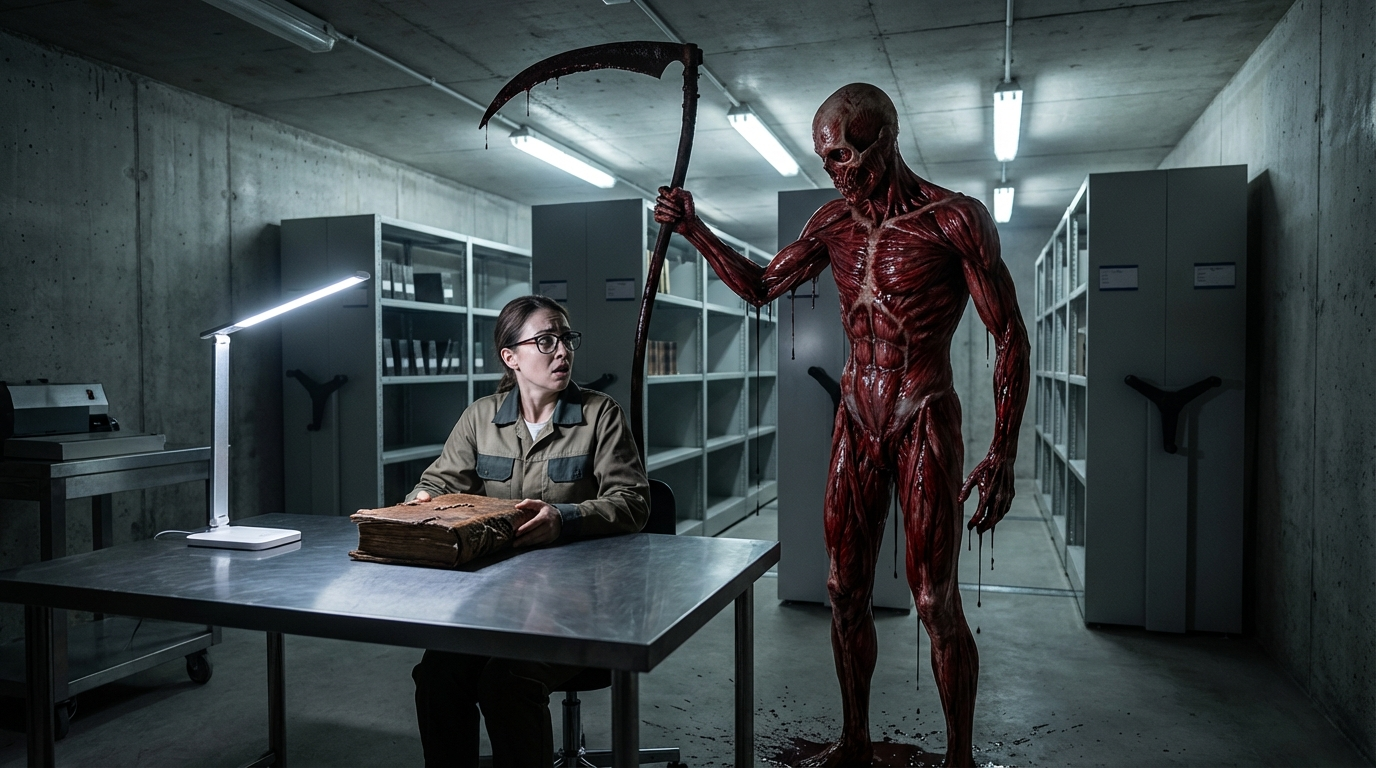
Translator's Doom – Horror Story is the focus of this in-depth HorrorStuck guide. We examine the known facts, evidence, leading explanations, and the details that still remain uncertain.
Translator's Doom – Horror Story: Key Facts and Context
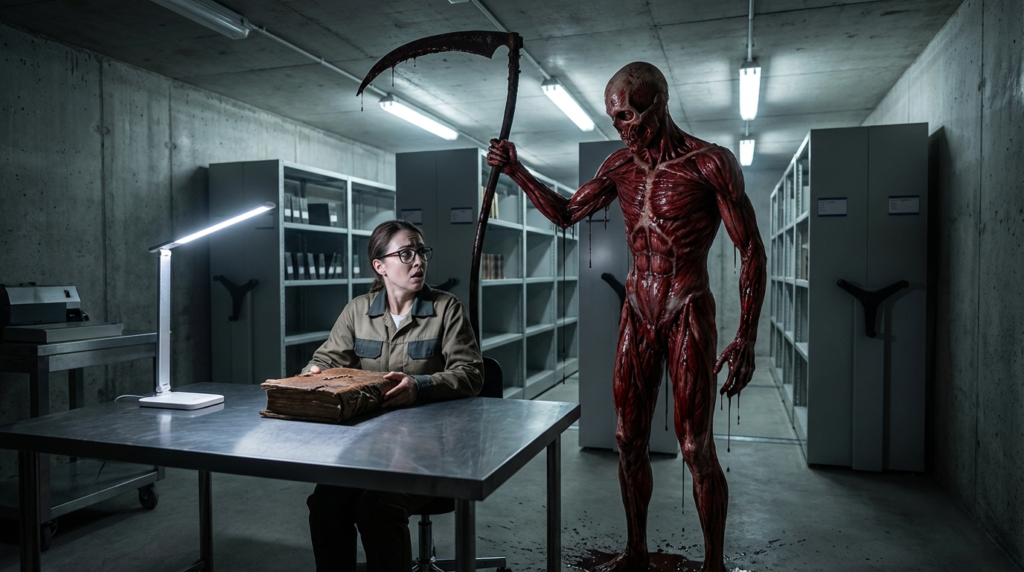
The silence in Sub-Basement C of the National Antiquities Archive was not merely an absence of sound; it was a physical weight. It was an industrial, climate-controlled quiet, heavy with the scent of ozone, dry rot, and the sharp, vinegar-like tang of decaying cellulose.
Elara Vance loved it.
She was a senior archivist, a woman who found far more comfort in the predictable decay of the past than the chaotic unpredictability of the present. The surface world was a mess of complicated relationships, unpaid bills, and a recent, spectacularly painful breakup that had left her feeling entirely hollowed out. Down here, buried fifty feet beneath the bustling city streets behind three feet of reinforced concrete and a bank vault door, things made sense. History, once written, could not betray you. It just sat there, waiting patiently to be understood.
It was 1:14 AM on a Thursday. Elara sat at her large stainless-steel examination table, the only island of light in the cavernous, shadowy room filled with towering, mechanized mobile shelving units. She adjusted the thick, black frames of her reading glasses and pulled the gooseneck LED lamp closer.
Before her lay Accession Item #404-B.
It had arrived in a crate of miscellaneous, uncatalogued donations from the estate of an eccentric, reclusive historian who had recently passed away in rural Romania. It was a diary, or at least it appeared to be one.
Elara pulled on a fresh pair of white cotton archival gloves. The fabric snapped softly against her wrists. She picked up her bone folder—a smooth, flat tool used for turning fragile pages—and gently wedged it under the heavy, dark cover of the book.
The binding was unusual. It wasn’t standard calfskin or Moroccan leather. It was excessively thick, pale, and possessed a strange, mottled texture that felt uncomfortably pliant beneath her gloved fingertips. It lacked any title, crest, or tooling.
She turned the cover. A faint smell wafted up from the gutter of the book—a scent that cut through the sterile archival air. It smelled like stagnant water, copper, and something sickeningly sweet.
Elara frowned, leaning closer. The pages were not paper or traditional parchment. They were thick, fibrous, and slightly translucent. Vellum, perhaps, but improperly cured.
She focused her magnifying glass on the first page. The text was entirely handwritten in a dense, spidery script. The ink was a profound, light-absorbing black. It was beautiful, but completely chaotic, lacking any margins or paragraph breaks.
“Alright, let’s see what you are,” Elara murmured to herself, her voice sounding thin and muffled in the vast room.
She pulled her massive, leather-bound volume of archaic linguistics closer. The language was not standard Latin. It took her nearly forty minutes of cross-referencing prefixes and grammatical structures to identify the root. It was an obscure, hybridized dialect—a bastardization of 15th-century Romanian and a localized, heretical sect of ecclesiastical Latin.
She set up her laptop, cracked her knuckles, and began the agonizingly slow process of translation.
“The watcher resides in the belly of the stone. Surrounded by the dead husks of memory, she seeks the truth in the dark.”
Elara smiled faintly. A poetic introduction. Many medieval monks and scholars began their texts with melodramatic observations of their surroundings. She typed the translation into her database.
She turned back to the book, tracing the next line with the tip of her bone folder.
“The air is chilled to preserve the rot, yet the watcher sweats beneath the false, artificial suns.”
Elara paused. She looked up at the humming LED lamp, then reached up to touch the back of her neck. Her skin was slightly damp with a nervous sweat. The temperature in the archive was strictly regulated to 62 degrees Fahrenheit, but a sudden, inexplicable flush of heat had crawled up her spine.
Coincidence, she told herself, shaking her head. A lucky, atmospheric guess by a long-dead writer.
She focused on the next block of text, her eyes straining against the dense, spidery script. The translation was becoming easier as she grew accustomed to the author’s idiosyncratic shorthand.
“She seeks comfort in the bitter black water, the ceramic vessel staining the table, a temporary warmth against the cold.”
Elara’s breath hitched. Her eyes darted to the right side of her desk. Resting precisely three inches from her laptop was her ceramic mug of black coffee. She hadn’t used a coaster. A small, dark ring of spilled coffee stained the pristine stainless steel of the examination table.
The silence of the archive suddenly felt less like a sanctuary and more like a trap. The low, ambient hum of the industrial dehumidifiers sounded like the steady, predatory breathing of a large animal.
“Okay, very funny,” Elara whispered, looking around the empty room. Her eyes scanned the dark gaps between the towering rows of mechanical shelving. “Is someone playing a joke? Did Greg set this up?”
Greg was the head archivist on the day shift, known for his immature sense of humor. But Greg couldn’t read 15th-century Romanian. Nobody in the department could, except her. And this book had been sealed in a crate that she had opened herself less than two hours ago.
She looked back down at the diary.
The ink.
Under the bright, focused beam of the LED lamp, the dense black script seemed to catch the light differently. It wasn’t matte, like aged iron gall ink. It was glossy.
Elara reached out with her right hand. Slowly, deliberately, she pressed the tip of her white cotton-gloved index finger against a letter in the center of the page.
She pulled her finger back.
A stark, jet-black smudge marred the tip of the pristine white glove.
The ink was wet.
Not damp from humidity. Wet. Fresh. As if the quill had been lifted from the page mere seconds ago.
A cold, primal surge of adrenaline spiked through Elara’s bloodstream. The metallic taste of absolute terror flooded her mouth. The logical, academic portion of her brain simply short-circuited, unable to process the physical impossibility of a five-hundred-year-old manuscript with wet ink.
She pushed her rolling chair backward, the wheels squeaking loudly against the polished concrete floor. She needed to leave. She needed to pack up her laptop, walk out the heavy vault door, take the elevator up to the lobby, and stand in the bright, comforting glow of the streetlights.
But a morbid, paralyzing compulsion kept her eyes locked on the book.
The text on the page was changing.
It wasn’t moving like a digital screen. It was more insidious. When she blinked, the spacing of the letters shifted. The dark ink seemed to pool, bleeding across the fibers of the vellum, reshaping itself into new, fresh words.
She didn’t want to translate it. Her entire body screamed at her to look away. But the translator’s obsession—the desperate, academic need to know—overrode her survival instinct.
She leaned forward, her heart hammering a frantic, painful rhythm against her ribs, and read the fresh, wet text.
“The watcher recoils. Fear takes root in her heart. She soils the white cloth of her hand with the blood of the page. She wishes to flee to the metal ascending box, but she knows the heavy iron door requires the turning of the wheel.”
Elara stared at the heavy vault door fifty feet away. It was a massive, circular steel door that required a manual turning of a central wheel to disengage the locking bolts. It took a solid thirty seconds of physical exertion to open.
“She looks to the door, calculating the distance, but the translation binds her. She must read. She must know what comes next.”
“No,” Elara sobbed, tears welling in her eyes, blurring her vision. “No, this isn’t real. I’m having a psychotic break. The stress. The isolation. I’m hallucinating.”
She squeezed her eyes shut, pressing the heels of her hands against her eyelids until bursts of jagged, colorful light exploded in the darkness. She counted to ten. She slowed her breathing. Ground yourself. Five things you can see. Four things you can touch.
She opened her eyes.
The diary remained on the table. The wet ink glistened.
“The watcher closes her eyes, seeking the false comfort of madness. But the truth remains upon the page. And the truth is no longer alone in the stone belly.”
The temperature in the room plummeted. The chill was so sudden and absolute that Elara’s breath plumed in the air in front of her, a misty white cloud in the harsh LED light.
From deep within the stacks, behind Row 7—Ancient Near East Antiquities—came a sound.
It was a wet, heavy sound. Slap. Squelch. Drag.
It sounded like a massive piece of raw, wet meat being dropped onto the concrete, followed by the sound of it being slowly dragged forward.
Elara froze. The blood drained from her face, leaving her entirely pale. She stared into the cavernous darkness between the towering shelves. The motion-sensor lights in that aisle had not activated. It was completely black.
Slap. Squelch. Drag.
The sound was moving. It was moving toward Row 6.
Elara’s trembling eyes dropped back to the diary. The ink was pooling again, forming new, jagged sentences. She translated them in real-time, her mind working with a frantic, desperate speed.
“The Flayed Scribe awakens. It smells the fresh fear. It smells the wet ink. It steps from the shadows of the old world into the new. It moves past the clay tablets.”
Row 6 housed the Sumerian cuneiform tablets.
Slap. Squelch. Drag.
The sound reached Row 5. The motion sensor light at the end of Row 5 flickered, clicked, and violently snapped on.
Elara gasped, clapping a hand over her mouth to muffle her own scream.
Standing at the end of the aisle, illuminated by the harsh fluorescent light, was a figure. It was incredibly tall, its head scraping the top of the eight-foot shelving units. It was humanoid in shape, but that was where the resemblance ended.
It had no skin.
It was a walking anatomical nightmare of exposed, glistening red muscle, yellow fat, and white tendon. But the muscle wasn’t wet with blood; it was wet with the same profound, light-absorbing black ink that filled the diary. The ink dripped from its exposed musculature, pooling on the concrete floor with a sickening splat. In its right hand, it held a massive, rusted iron scythe, the curved blade blackened with decades of dried gore.
It didn’t have a face. Just a smooth, wet dome of dark red muscle where the features should have been. Yet, Elara knew with absolute certainty that it was looking directly at her.
“The watcher sees the Scribe. The terror paralyzes her limbs. She is rooted to the metal table, a lamb awaiting the harvest.”
Elara tried to stand. She commanded her legs to push the chair back, to turn, to run for the vault door. But her body was completely locked. It was as if the words on the page had rewritten her nervous system, severing the connection between her brain and her muscles. She was a passenger in her own paralyzed body.
The Flayed Scribe took a step forward. Slap. Squelch. Drag. It moved with a jerky, unnatural gait, leaving a thick trail of black ink in its wake.
“The Scribe approaches. It brings the silence of the void. It brings the ink that must be replenished.”
The creature raised the heavy iron scythe. The blade scraped against the metal shelving of Row 4, sending a shower of sparks into the air and emitting a high-pitched, agonizing screech that tore through the quiet of the archive.
Elara sat at the table, tears streaming silently down her frozen cheeks. The smell of the entity washed over her—the overwhelming, suffocating stench of rotting swamp water, copper, and old blood. It was the exact smell of the diary’s binding.
The creature reached the edge of the light cast by her desk lamp.
It stood towering over her, a monolith of wet, inked meat. The heat radiating from its exposed muscles was sickeningly intense. It slowly raised the scythe, positioning the rusted, curved blade directly over the back of Elara’s neck.
Elara’s eyes were locked on the open diary on the desk. She couldn’t look up. She could only read her own final moments as they formed in fresh, wet ink on the ancient vellum.
“The watcher weeps, but she makes no sound. The Scribe raises the instrument of harvest. The watcher understands, at the very end, that the history does not merely record the past. It dictates the future.”
The ink on the page seemed to boil, shifting one final time.
“The blade descends. The neck is severed. The blood flows hot and bright, mixing with the dark, and the ink is made new once more.”
Elara felt the displacement of air as the massive scythe swung downward. She felt the cold bite of the rusted iron against her skin for a fraction of a millisecond.
Then, the world went entirely black.
At 7:00 AM, Greg, the head archivist on the day shift, keyed in his security code and spun the heavy wheel of the vault door to Sub-Basement C.
“Morning, Elara,” he called out, his voice echoing in the large room. “Did you finish that Eastern European donation?”
He walked toward the center examination table. The LED lamp was still on. Elara’s laptop was powered down, closed neatly on the desk.
Elara was gone.
Greg frowned. He walked up to the table. Resting perfectly in the center, bathed in the pool of light, was the uncatalogued diary.
Greg picked it up. He noted the strange, mottled texture of the pale binding. It felt oddly pliant, almost soft.
He opened the book.
The pages were entirely blank. There wasn’t a single drop of ink on the thick, fibrous vellum.
Greg sighed, shaking his head. “Classic Elara. Leaves the weird stuff for me to figure out.”
He closed the book, completely failing to notice the small, fresh smudge of dark red liquid rapidly oxidizing to black on the stainless steel table beneath the binding. He tucked the diary under his arm, whistling a cheerful tune, and walked back toward the elevator, leaving the heavy silence of the archive waiting for the next translator to arrive.
Further Reading & External Resources
Ultimately, Translator's Doom – Horror Story remains compelling because the documented evidence answers some questions while leaving others open to careful investigation.