Table of Contents
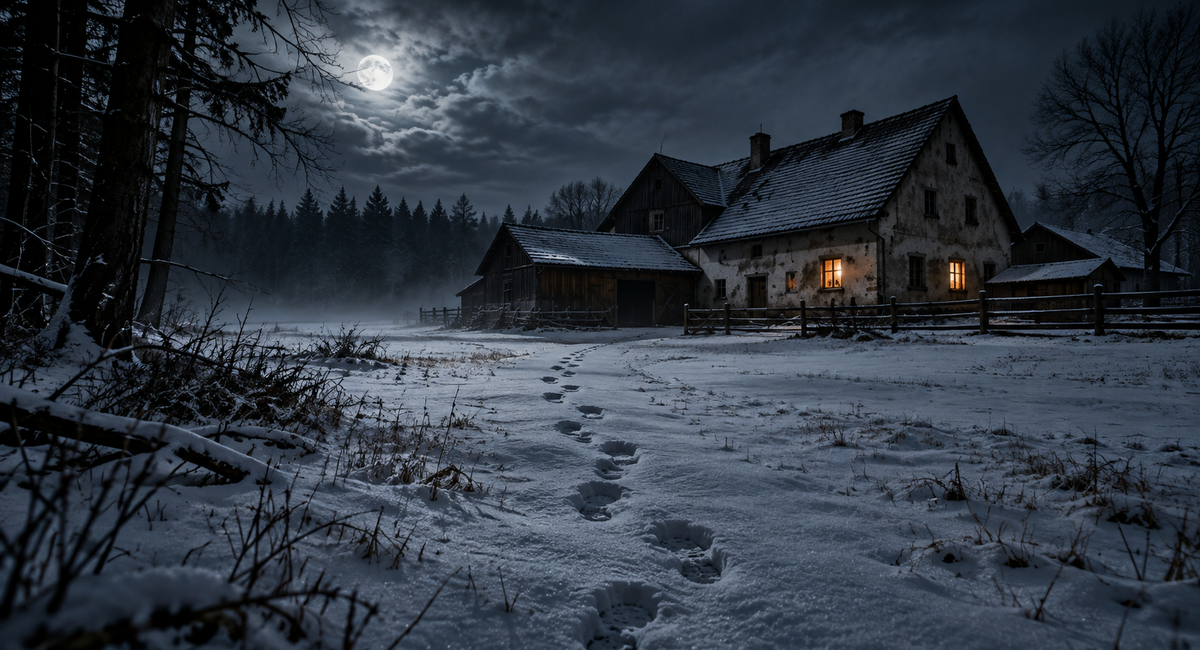
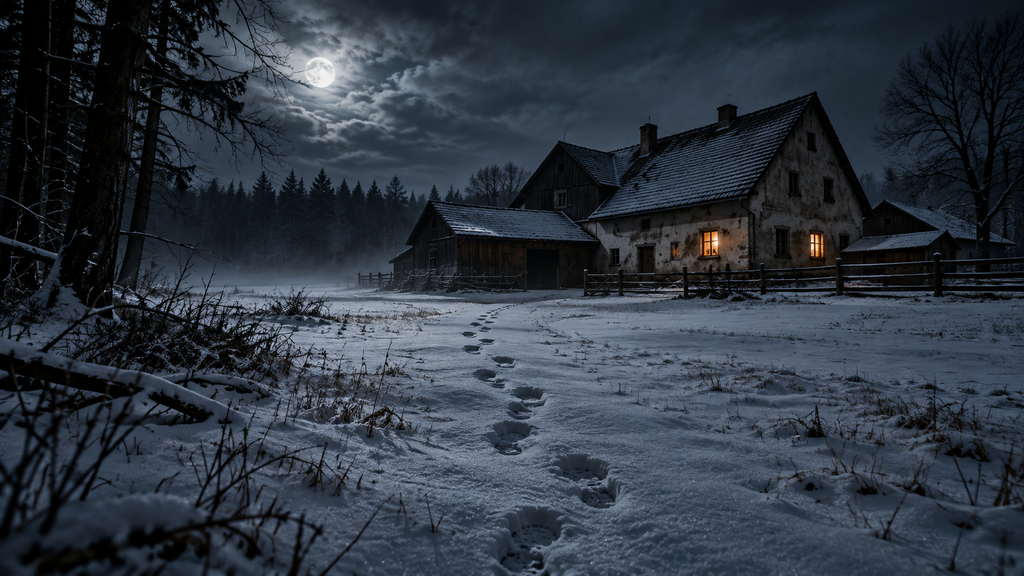
Imagine discovering footprints in the snow outside your home.
They begin at the edge of a forest.
They lead directly toward your house.
But there are no footprints going back.
Then you begin hearing noises above you at night.
Footsteps in the attic.
A newspaper appears on your property that nobody in your family bought. A house key goes missing. Something seems to be moving around the farm after everyone has gone to bed.
You search the building.
You find nothing.
Days later, everyone living there is dead.
This isn’t the plot of a horror movie.
It is the disturbing mystery of Hinterkaifeck, an isolated Bavarian farm where six people were murdered around the night of March 31, 1922.
More than a century later, nobody has ever been convicted of the killings.
And perhaps the most frightening possibility is not simply that a murderer came to Hinterkaifeck.
It is that someone may have already been watching the family before the murders occurred.
Table of Contents
- What Was Hinterkaifeck?
- Who Lived at Hinterkaifeck?
- Strange Events Before the Murders
- The Footprints Leading From the Forest
- Footsteps in the Attic
- The Missing Key and Mysterious Newspaper
- The New Maid Arrives
- What Happened on March 31, 1922?
- The Discovery of the Bodies
- Did the Killer Remain at Hinterkaifeck?
- Why Robbery Didn’t Fully Explain the Murders
- The Investigation
- Lorenz Schlittenbauer: The Most Famous Suspect
- Was Viktoria’s Husband Really Dead?
- Could a Stranger Have Committed the Murders?
- Was Someone Hiding Inside Hinterkaifeck?
- What Happened to the Farm?
- Why the Hinterkaifeck Murders Remain So Terrifying
- Frequently Asked Questions
What Was Hinterkaifeck?
Hinterkaifeck was a small, isolated farmstead in Bavaria, southern Germany.
It stood near the hamlet of Gröbern, outside the village of Waidhofen, roughly 70 kilometers north of Munich.
The farm was separated from neighboring properties by fields and woodland.
That isolation would become one of the defining features of the case.
In March 1922, six people were staying at Hinterkaifeck.
Within days, all six would be dead.
Contemporary investigators concluded that the murders most likely occurred during the evening of March 31 or during the night leading into April 1. The bodies were not discovered until April 4.
Who Lived at Hinterkaifeck?
The household consisted of several generations of one family.
Andreas Gruber
Andreas Gruber was the elderly patriarch of the farm.
He lived at Hinterkaifeck with his wife, daughter and grandchildren.
Cäzilia Gruber
Cäzilia was Andreas’ wife.
She was in her seventies when the murders occurred.
Viktoria Gabriel
Their adult daughter, Viktoria Gabriel, was a widow.
Her husband, Karl Gabriel, had reportedly been killed during World War I.
Cäzilia Gabriel
Viktoria’s daughter was also named Cäzilia.
She was a school-age child.
Josef
Viktoria’s young son Josef was approximately two years old.
Maria Baumgartner
The sixth victim was not a member of the family.
Maria Baumgartner was a newly hired maid.
Tragically, March 31, 1922 appears to have been her first day working at Hinterkaifeck.
She arrived at approximately 4:30 p.m., accompanied by her sister, who stayed for about an hour before leaving.
Within hours, Maria was dead.
Strange Events Before the Hinterkaifeck Murders
If the Hinterkaifeck story consisted only of an unsolved multiple murder, it would already be disturbing.
But what allegedly happened in the days and weeks before the killings transformed the case into something far stranger.
Andreas Gruber reportedly told people about several unusual events around the property.
Some are well represented in surviving case material.
Others come from later testimony and should therefore be treated cautiously.
The most famous include:
- footprints approaching the farm from the forest;
- noises or footsteps heard in the attic;
- a missing house key;
- a newspaper appearing that apparently didn’t belong to the family;
- signs that someone had interfered with a farm building;
- unexplained activity involving the livestock.
Even researchers dedicated to the case caution that some details entered the story through later recollections, newspapers or hearsay rather than surviving contemporary documentation.
But taken together, the reports create an unsettling possibility.
Someone may have been coming onto the property before the murders.
The Footprints Leading From the Forest
The footprints are perhaps the most famous detail in the entire Hinterkaifeck mystery.
According to accounts preserved from the investigation, Andreas Gruber noticed footprints in fresh snow leading from the direction of the woods toward the farm.
What troubled him was what he apparently did not find.
There were reportedly no corresponding tracks leading away again.
The trail appeared to approach Hinterkaifeck and stop there.
Gruber is said to have told several people about the footprints.
The surviving archival reconstruction notes that reports of tracks leading toward the property appear in the case record, although exact details vary between accounts.
It raises an obvious question.
Where did the person who made those tracks go?
Perhaps the tracks disappeared for an ordinary reason.
Perhaps weather destroyed them.
Perhaps the person left by another route.
Or perhaps whoever approached Hinterkaifeck never left immediately.
That final possibility has haunted the case ever since.
Footsteps in the Attic
Then there were the noises.
Andreas reportedly told people that the family had heard sounds coming from the attic above the living area.
They sounded like footsteps.
He searched the building.
According to the story, he found nobody.
Accounts involving noises at Hinterkaifeck become particularly eerie because the family’s previous maid is widely reported to have left the farm months earlier after becoming frightened by unexplained sounds.
She supposedly believed that the house might be haunted.
However, this part of the story deserves caution.
Some details about the previous maid and the allegedly haunted farmhouse became more prominent in later retellings, and not every aspect can be confirmed with equal confidence from surviving contemporary records.
The paranormal interpretation is unnecessary anyway.
There is a more disturbing possibility.
The noises might have been caused by a real person.
The Missing Key and Mysterious Newspaper
Another strange event reportedly involved a missing house key.
Andreas allegedly told a neighbor that the household could no longer find one of its keys.
Later accounts concerning the discovery of the bodies would make that missing key particularly interesting.
There was also the matter of a newspaper.
A copy of a Munich newspaper reportedly appeared near Hinterkaifeck even though the household apparently did not subscribe to it.
According to surviving chronology compiled from the investigation, Andreas questioned whether someone nearby received the newspaper.
Apparently, nobody did.
Individually, none of these events proves anything.
People lose keys.
Newspapers get misplaced.
Buildings creak.
Footprints can have innocent explanations.
But when all of them are placed beside what happened next, they become much harder to dismiss.
The New Maid Arrives
On the afternoon of March 31, 1922, Maria Baumgartner arrived at Hinterkaifeck to begin working as the household maid.
Her sister accompanied her to the farm.
At around 4:30 p.m., Maria arrived.
Approximately an hour later, her sister left.
That appears to have been one of the last confirmed contacts anyone outside the farm had with the household before the murders.
Maria had entered the farm on perhaps the worst possible day.
She would never leave alive.
What Happened on March 31, 1922?
Nobody knows exactly what occurred inside Hinterkaifeck that night.
Investigators reconstructed the likely sequence from the locations of the bodies.
Four victims were found in the barn area:
Andreas Gruber
Cäzilia Gruber
Viktoria Gabriel
young Cäzilia Gabriel
The prevailing reconstruction is that these four entered the barn separately or in succession and were attacked there.
Why would several members of the family go into the barn at night?
Perhaps they heard an animal making noise.
Perhaps someone called them.
Perhaps one person went to investigate something unusual, and the others followed when that person failed to return.
We simply don’t know.
The murder weapon was believed to be a heavy farm implement commonly described as a Reuthaue, roughly comparable to a mattock or grub hoe.
Evidence indicates that the weapon came from the property itself.
After killing the four people in the barn, the murderer apparently entered the residential portion of the farm.
Maria Baumgartner was killed in her room.
Two-year-old Josef was killed in Viktoria’s room.
Six people were now dead.
But the strange activity at Hinterkaifeck may not have ended with the murders.
The Discovery of the Bodies
The household’s absence gradually became noticeable.
Young Cäzilia did not attend school.
People visiting Hinterkaifeck received no response.
The family failed to appear where neighbors expected them.
Eventually, on April 4, 1922, several local men went to the farm to investigate.
Among them was neighbor Lorenz Schlittenbauer.
They entered the property.
Inside the barn, they found four bodies.
The remaining two victims were discovered inside the house.
Police from Munich arrived and began what would become one of Germany’s most famous unsolved murder investigations.
Crime-scene photographs were taken on April 5.
Autopsies followed on April 6 and 7.
Unfortunately, forensic investigation in 1922 was far less sophisticated than it is today.
The crime scene had also already been entered by multiple people.
Valuable evidence may have been disturbed before investigators could properly document it.
Did the Killer Remain at Hinterkaifeck?
This is perhaps the most frightening question surrounding the Hinterkaifeck murders.
Evidence and later testimony suggested that someone may have remained active around the property after the family had been killed.
Reports indicated that livestock had been cared for.
There were also reports of smoke or fire at the property after the likely time of the murders.
One later investigative summary considered it established that the animals had been fed, although the exact extent and timing of activity on the farm remains disputed in historical reconstructions.
If the killer stayed at Hinterkaifeck, the implications are extraordinary.
Imagine murdering six people and then not immediately fleeing.
Instead, the killer may have moved around the house.
Fed animals.
Used the farm.
Perhaps eaten food.
Perhaps slept there.
And all the while, six bodies remained on the property.
Why would someone do that?
A stranger would seemingly have every reason to escape as quickly as possible.
Someone familiar with the farm, however, might have felt less threatened by remaining there.
It is one reason investigators and amateur researchers have long considered people who knew the family.
Why Robbery Didn’t Fully Explain the Murders
Police naturally considered robbery.
A remote farmhouse could have appeared an attractive target.
But there was a problem with that theory.
Money and valuables apparently remained on the property.
If robbery was the killer’s primary motive, why leave valuable items behind?
This did not make robbery impossible.
The killer might have been interrupted.
The murderer could have taken something investigators never identified.
Or money might have been only one part of the motive.
But the scene increasingly appeared personal.
Someone had killed an entire household—including two children and a maid who had only just arrived.
That level of violence suggested something more complicated than a burglary gone wrong.
The Investigation Into the Hinterkaifeck Murders
Investigators interviewed numerous people and followed multiple theories.
The murder weapon appeared to have belonged to the farm.
Possible motives ranged from robbery and revenge to family disputes and personal relationships.
But investigators faced enormous difficulties.
There were no security cameras.
No modern fingerprints database.
No DNA testing.
No mobile-phone records.
No digital trail.
The isolated nature of Hinterkaifeck also meant there were few witnesses who could reliably say who had visited the farm.
Over the following years, authorities repeatedly revisited suspects and leads.
Nobody was successfully prosecuted.
Lorenz Schlittenbauer: The Most Famous Suspect
The name most often associated with theories about the Hinterkaifeck killer is Lorenz Schlittenbauer.
Schlittenbauer lived nearby.
He had previously been romantically involved with Viktoria Gabriel and was connected to a complicated dispute involving the paternity and financial support of young Josef.
Viktoria’s family history was itself troubled. Andreas Gruber and Viktoria had previously been convicted in an incest case, which added another dimension to questions surrounding Josef’s paternity.
Schlittenbauer was also one of the men who entered Hinterkaifeck when the bodies were discovered.
Some witnesses later interpreted aspects of his behavior at the crime scene as suspicious.
This has made him a favorite suspect in books, documentaries and online discussions.
But there is a critical fact that responsible accounts of the Hinterkaifeck murders must include:
Schlittenbauer was never proven to be the killer.
Police investigated him seriously.
Contemporary prosecution records indicate that investigators at various points found no clear motive or sufficient evidence against him. An investigation targeting him was eventually discontinued because the evidence was inadequate.
Rumors nevertheless continued for years.
And because the case was never solved, suspicion never completely disappeared.
Was Viktoria’s Husband Really Dead?
Another theory sounds almost like a horror-film twist.
Viktoria’s husband, Karl Gabriel, had reportedly died while fighting during World War I.
Because his remains were not recovered and strange rumors developed later, some speculated that Karl might secretly have survived.
Could he have returned to Hinterkaifeck?
Could resentment or jealousy have motivated the murders?
The theory became even stranger after World War II, when stories circulated involving German prisoners returning from Soviet captivity and a mysterious German-speaking officer allegedly claiming knowledge of the Hinterkaifeck murders.
But the theory has serious weaknesses.
Soldiers who served alongside Karl Gabriel reportedly said they had seen and identified his body on the battlefield.
There is no convincing evidence that he survived the war and returned to murder his family.
The story remains fascinating.
Evidence for it does not.
Could a Stranger Have Committed the Murders?
Police also considered criminals, vagrants and people passing through the region.
The early 1920s were turbulent years in Germany.
World War I had ended only a few years earlier.
Economic instability, displacement and political violence affected large parts of society.
An unknown attacker cannot therefore be ruled out.
But again, certain aspects of the crime seem difficult to explain.
How did the killer move around the property confidently?
Why apparently use a farm tool?
Why kill everyone?
Why potentially remain after the murders?
And if the strange incidents before March 31 were connected to the killer, how long had that person been around Hinterkaifeck?
These questions have never been satisfactorily answered.
Was Someone Hiding Inside Hinterkaifeck?
Perhaps the darkest theory is also one of the simplest.
Someone may have been hiding somewhere on or around the property.
Consider the reports:
Footprints approached the farm.
There were apparently no tracks leading away.
Footsteps were heard overhead.
A key disappeared.
A strange newspaper appeared.
A farm building had reportedly been tampered with.
Then the entire household was murdered.
Researchers have suggested that an intruder could have concealed themselves in the attic, barn or storage spaces.
But this remains a theory.
There is no conclusive evidence proving that someone secretly lived inside Hinterkaifeck before the murders.
Still, it is easy to understand why the idea refuses to disappear.
For many people, the possibility of a hidden intruder is far more frightening than anything supernatural.
A ghost in the attic is frightening.
A human being silently watching you from above is worse.
What Happened to the Hinterkaifeck Farm?
The victims were buried on April 8, 1922, in Waidhofen.
The farm itself did not survive for long.
Hinterkaifeck was eventually demolished.
During the demolition and subsequent examination of the property, additional items connected with the investigation were recovered, but nothing ultimately identified the killer.
Today the farmhouse where the murders occurred no longer stands.
But the name Hinterkaifeck has become permanently associated with one of Europe’s most disturbing unsolved crimes.
Why Were the Hinterkaifeck Murders Never Solved?
Several factors probably contributed.
1. Crime-Scene Contamination
Neighbors entered the property before specialist investigators arrived.
People moved through areas containing evidence.
For modern investigators, this would be a forensic nightmare.
2. Limited Forensic Technology
There was no DNA profiling in 1922.
Modern blood-pattern analysis, digital databases and many contemporary investigative tools simply did not exist.
3. Missing or Destroyed Records
Not all original investigative material survived.
Historical events—including the destruction associated with World War II—affected archival records.
4. Conflicting Witness Statements
Some of the case’s most famous details were recorded years after the murders.
Memories change.
Rumors spread.
Facts and folklore begin to mix.
5. No Definitive Physical Link to a Suspect
Police investigated numerous people, but no surviving evidence was strong enough to conclusively identify one murderer.
What Makes Hinterkaifeck Different From Other Unsolved Murders?
There are thousands of unsolved homicide cases.
Few have produced the same enduring fascination as Hinterkaifeck.
Part of the reason is the setting.
A lonely farmhouse.
A dark forest.
Winter tracks in the snow.
No nearby witnesses.
Strange noises overhead.
A missing key.
A family slowly realizing that something may be wrong around their home.
Then six murders.
Then the possibility that the killer simply remained there.
The story contains almost every element of classic horror fiction.
Except Hinterkaifeck was real.
The Paranormal Reputation of Hinterkaifeck
Because of the attic noises and reports concerning the previous maid, Hinterkaifeck is occasionally described as a “haunted farm.”
But there is no reliable evidence that anything paranormal occurred there.
The noises could have come from animals.
Old farm buildings naturally make sounds.
People under stress can misinterpret ordinary noises.
Or perhaps someone really was moving inside or around the building.
From a real-life horror perspective, that possibility is much more disturbing.
The Hinterkaifeck case doesn’t need ghosts.
The unknown human presence suggested by parts of the evidence is frightening enough.
The Most Disturbing Question
More than 100 years after the murders, one question remains at the center of the Hinterkaifeck mystery:
Who was already at the farm?
If the footprints, missing key and attic noises were connected to the murders, the crime did not begin on March 31.
It began earlier.
The killer may have watched.
Waited.
Learned the family’s routine.
Perhaps even moved through parts of the property without being detected.
Andreas Gruber apparently knew something wasn’t right.
He reportedly searched.
But he never found the source.
Then, sometime during the evening of March 31, whatever had been lurking around Hinterkaifeck finally revealed itself.
Six people died.
The murderer disappeared.
And more than a century later, we still don’t know who walked out of that isolated Bavarian farm.
Frequently Asked Questions About the Hinterkaifeck Murders
What were the Hinterkaifeck murders?
The Hinterkaifeck murders were the killings of six people at an isolated Bavarian farmstead in Germany in 1922. The victims were members of the Gruber-Gabriel household and their newly arrived maid, Maria Baumgartner.
When did the Hinterkaifeck murders happen?
Investigators believed the murders most likely occurred on the evening of March 31, 1922, or during the night leading into April 1.
When were the bodies discovered?
The six victims were discovered on April 4, 1922, after neighbors became concerned about the family’s unexplained absence.
How many people died at Hinterkaifeck?
Six people were murdered: Andreas Gruber, Cäzilia Gruber, Viktoria Gabriel, Cäzilia Gabriel, Josef and Maria Baumgartner.
What weapon was used in the Hinterkaifeck murders?
Investigators believed the killer used a heavy farm tool known as a Reuthaue, usually described in English as something similar to a mattock or grub hoe.
Were there footprints before the Hinterkaifeck murders?
According to accounts preserved in the investigation, Andreas Gruber reported discovering footprints in snow approaching the farm from the direction of the woods, with no obvious corresponding tracks leading away.
Did someone live in the attic at Hinterkaifeck?
There is no proof that anyone secretly lived in the attic. However, reports of footsteps, footprints and other unusual activity have led to a long-standing theory that someone may have been hiding somewhere on the property before the murders.
Did the Hinterkaifeck killer stay in the house?
Evidence suggested that activity continued at the property after the likely time of the murders, including care of the livestock. This has led researchers to believe the killer may have remained at or returned to the farm for some period after the killings. The exact details remain uncertain.
Who was the main suspect in the Hinterkaifeck murders?
Neighbor Lorenz Schlittenbauer became the most famous suspect because of his previous relationship with Viktoria Gabriel, the paternity dispute surrounding Josef and later suspicions about his behavior. However, investigators never obtained sufficient evidence to charge him with the murders.
Were the Hinterkaifeck murders ever solved?
No.
More than a century later, the identity of the Hinterkaifeck killer remains unknown.
Final Thoughts
There is an important difference between a scary story and a true one.
A fictional monster disappears when the book closes.
The Hinterkaifeck murderer was a real human being.
Someone entered—or was already inside—an isolated farmhouse.
Someone killed six people.
Someone apparently escaped without ever being conclusively identified.
Perhaps the killer was a neighbor.
Perhaps a stranger.
Perhaps someone connected to the family.
Perhaps the famous footprints and attic noises had nothing to do with the murders at all.
Or perhaps Andreas Gruber had already discovered the first signs of the person who would eventually kill everyone at Hinterkaifeck.
That is the part of the story that remains difficult to forget.
The family may have known someone was there.
They simply didn’t know where.
Sources and Further Reading
Historical reconstructions of Hinterkaifeck rely heavily on surviving records from the Munich and Augsburg state archives. The Hinterkaifeck archival project documents hundreds of pages of surviving material and distinguishes contemporary evidence from later recollections.
The reconstructed chronology provides dates for Maria Baumgartner’s arrival, the likely night of the killings, discovery of the bodies, police arrival, autopsies and burial.
Surviving investigative material also shows that Lorenz Schlittenbauer was repeatedly examined as a suspect but that authorities found insufficient evidence to prosecute him.